Safety Training That Saves Lives, Not Just Checkboxes
When safety training is a formality, people get hurt—how to transform your compliance burden into a life-saving asset
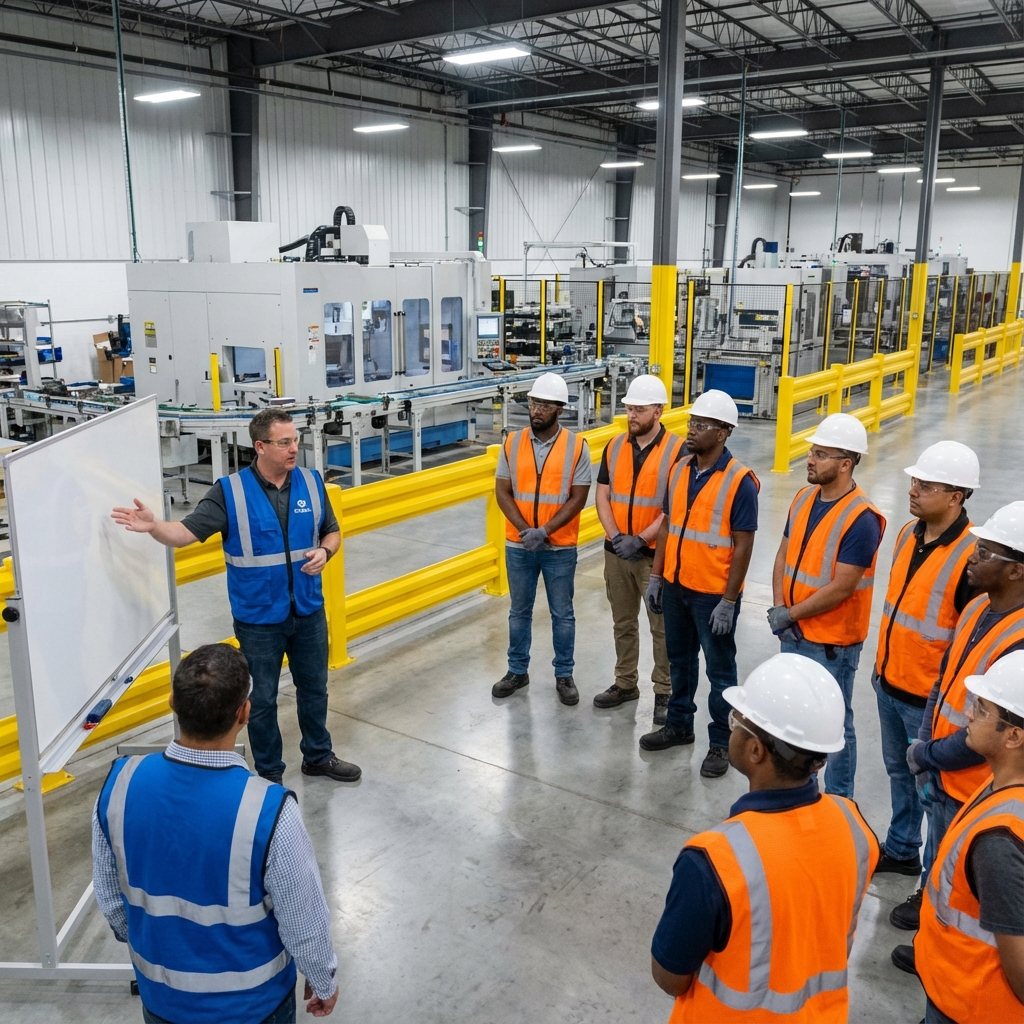
In high-stakes industries—manufacturing, chemicals, construction—the difference between a safe shift and a life-altering accident often comes down to what an employee remembers in a split second. But our traditional methods of teaching safety prioritize legal defensibility over human retention.
We've created a culture where "Safety Training" is synonymous with "Boredom." We click through slides, wait for the timer to expire, and pass the quiz to get the certificate. We check the box. But checking a box doesn't stop a chemical spill. Checking a box doesn't prevent a fall from height.
It's time to stop training for the auditors and start training for the workers.
The Compliance Paradox
The "Compliance Paradox" is simple: the more regulations we add, the more complex the training becomes. The more complex the training, the less people remember. The less people remember, the more likely they are to make a mistake. The more mistakes they make, the more regulations we add.
We are drowning in a sea of "mandatory" information. A typical industrial worker might be required to understand OSHA standards, environmental regulations, specific machine safety protocols, and corporate ethics policies—all delivered in a single, overwhelming annual refresher. The cognitive load is simply too high.
When everything is "critical," nothing is. Workers learn to tune out the noise to get their actual work done. Safety training becomes an obstacle to productivity rather than a foundation for it.
The Cost of Formality
When safety training is treated as a formality, the costs are measured in more than just dollars.
- The "Near-Miss" Gap. Most accidents are preceded by several "near-misses." In a checkbox culture, workers often don't recognize near-misses for what they are—important warnings. They haven't been trained to observe; they've been trained to comply.
- The Erosion of Trust. When employees see that the company treats safety training as a "necessary evil" to satisfy legal requirements, they assume the company's commitment to actual safety is equally superficial. If the training is a joke, they assume the rules are, too.
- The Regulatory False-Sense-of-Security. Companies with a 100% training completion rate often think they are safe. But completion is a measure of attendance, not competence. You can have perfect compliance records and a dangerous workplace simultaneously.
Moving to Grounded Safety Training
Real safety training needs to be grounded in three things: Reality, Context, and Frequency.
1. Reality: From Theory to Application
Instead of abstract principles ("Maintain a clean workspace"), safety training should focus on real-world scenarios specific to that worker's environment. "Where are the trip hazards in Bay 4?" is more useful than "Define a trip hazard." AI-powered training can pull from actual incident reports and near-miss logs to create training that reflects what is *actually* happening on your facility floor.
2. Context: Training at the Point of Need
Annual refreshers are too far removed from daily work. Safety training is most effective when it's integrated into the workflow. Imagine a technician who is about to handle a hazardous material they haven't worked with in six months. Instead of relying on their memory of a workshop from last January, they can access a focused, AI-guided refresher on that specific material's handling protocols right on their tablet or headset.
3. Frequency: The Power of Reinforcement
Knowledge decays. Behavioral change requires repetition. Short, frequent "microlearning" sessions—taking 2-3 minutes a week—are far more effective at building a safety culture than an 8-hour marathon once a year. By using AI to identify persistent knowledge gaps across a workforce, companies can deliver targeted reinforcement where it's needed most.
The Role of the Knowledge Firewall
In safety training, there is no room for hallucination. If an AI tells a worker that it's okay to bypass a specific lockout-tagout step because it "thinks" that's a common practice, someone could die.
This is why "Bounded Knowledge" is critical. At Episteca, our Knowledge Firewall ensures that the AI *only* discusses safety protocols that exist in the company's approved, verified safety manuals. If the manual says the pressure must be below 50 PSI before opening a valve, the AI will never suggest 60 PSI, regardless of what it "learned" from the open internet.
Furthermore, by providing an audit trail for every interaction, companies can prove not just that a worker "attended" training, but that they demonstrated understanding of specific, critical safety procedures.
From Compliance to Culture
The goal is to move from a "Compliance Culture" (following rules to avoid punishment) to a "Safety Culture" (following rules because we value each other). This shift happens when training stops being a burden and starts being a resource.
When safety information is accurate, accessible, and grounded in the worker's reality, it becomes a tool for empowerment. Workers feel more confident, managers feel more secure, and most importantly, everyone goes home at the end of the shift.
Safety training shouldn't just be about checking a box. It should be about making sure that box never has to be checked on an accident report.
Build a True Safety Culture
Discover how Episteca makes safety training active, grounded, and life-saving.
Book a DemoRelated reading: The Zero-Hallucination Guarantee, The Documentation Decay Problem, RAG vs Fine-Tuning