Generate course content, faculty development programs, and research training from your institution's scholarly expertise. Every concept verified against source material. No hallucinated citations. No invented methodologies.
Universities possess extraordinary intellectual capital, but translating it into scalable training has always required a painful tradeoff between volume and academic rigor.
Your best faculty can only teach so many sections. When you try to scale, quality degrades: inconsistent experiences, materials taught by TAs who just learned the content, and research methods passed down orally rather than systematically.
Curriculum development takes semesters. Faculty lack time, and ID teams are stretched thin. By the time a course launches, the field has moved on, and your institution's latest research remains unutilized in the classroom.
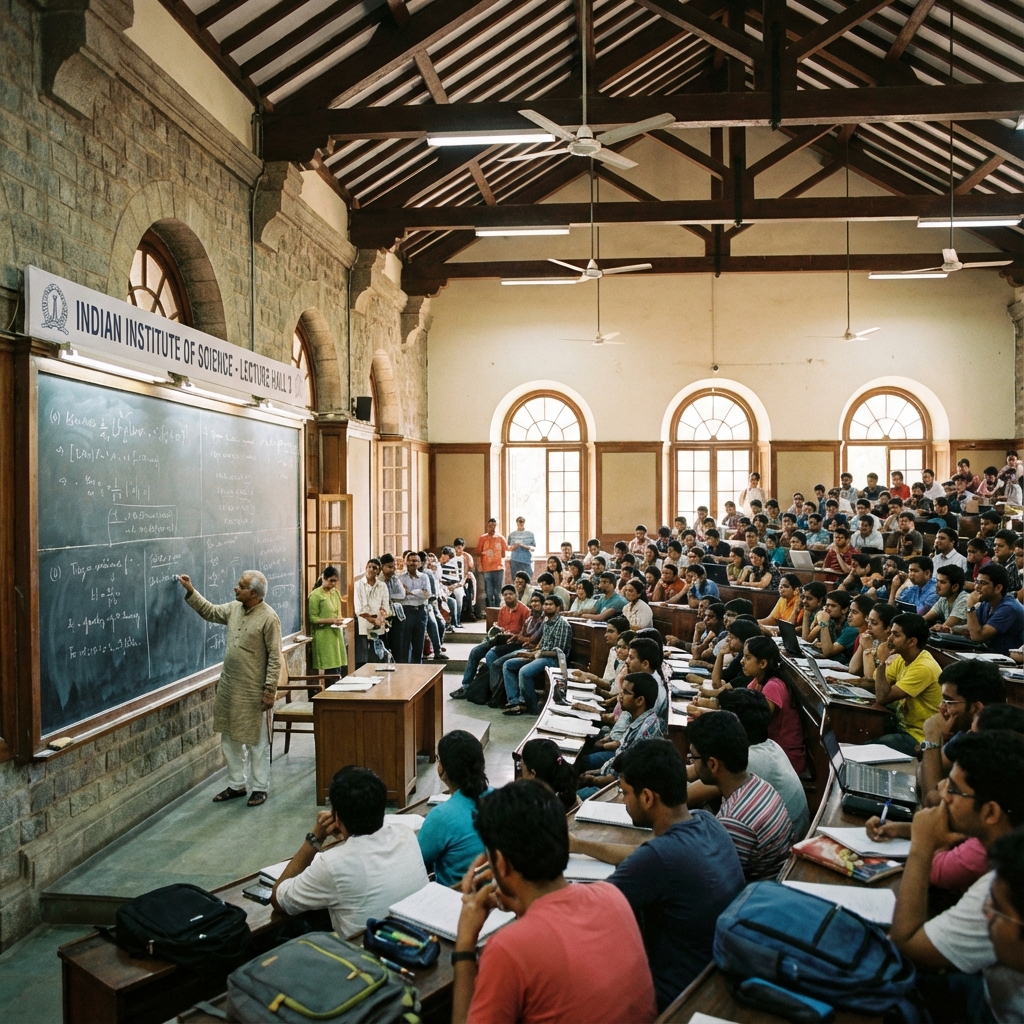
Upload publications and lecture materials. Generate learning modules, reading guides, and assessments grounded strictly in your faculty's expertise.
Transform institutional teaching knowledge into systematic development programs. New faculty learn your pedagogical values, not generic templates.
Preserve methodological expertise across generations. Standardize training on qualitative techniques, lab protocols, and IRB procedures.
Scale grant writing, academic presentation, and job market prep using your institution's successful examples and historical data.
In an academic environment, a statement without a source is just an opinion. Episteca treats every generation as a scholarly claim that must be backed by evidence.
The system cannot cite sources outside your library. Every citation links to an actual passage in your documentation.
When topics aren't covered, Episteca flags it. This provides curriculum intelligence on where documentation is lacking.
Contested theories are presented as such, reflecting the complexity of your actual source materials.
"Research on [Subject] shows [Result] (Smith & Wesson, 2021)."
"According to the Department Methods Handbook (v2.4), researchers should use [Methodology] [Source: Page 42]."
A gateway course with 2,000 students across 40 sections suffered from inconsistent outcomes. Episteca used master materials to generate TA training and uniform modules, ensuring rigor regardless of section instructor.
Doctoral candidates often had varying methodological foundations depending on the rotating faculty. Episteca preserved faculty expertise into a permanent, comprehensive methods curriculum available to all cohorts.
Institutional teaching values were often lost in translation. Episteca transformed the faculty handbook and DEI guides into an interactive onboarding experience tailored to the specific student population metrics.
A business school needed to respond to rapid industry shifts. Curriculum development time was compressed from 18 months to weeks by generating drafts from faculty reports and professional standards for review.
Episteca generates from your source materials, preserving the nuance and complexity of the original content. We don't oversimplify—if your faculty's work engages with contested debates, generated content reflects that complexity with appropriate citations.
Absolutely. Generated content is a starting point for faculty review and refinement. Faculty approve all content before deployment. The tool accelerates development; faculty retain intellectual authority.
Every citation in generated content links to an actual passage in your uploaded source documents. The system cannot cite sources that aren't in your library. Click any citation to verify the source.
Yes. We offer direct Canvas integration plus SCORM export. Similar support for Blackboard, Moodle, and Brightspace.